Historically, the diagnosis of Lowe syndrome in a potentially affected male was usually made by a geneticist (a physician specifically trained in genetics). In many cases, however, there are a few initial clues (symptoms) to assist in diagnosis. For example, you may see low muscle tone, cataracts, infantile glaucoma, undescended testes, or a sacral dimple. A number of the clues (symptoms) of Lowe syndrome may not manifest themselves until a later age.
Today we have a number of highly accurate diagnostic techniques available. This page will help you understand those techniques and when they are applicable. We will discuss the methods for both post-natal and pre-natal situations.
The Genetics Behind Lowe Syndrome
LS is caused by a single defective gene (an alteration or “mutation”) in a gene called OCRL1. Because of this defective gene, an essential enzyme called PIP2-5-phosphatase is not produced. This is the underlying cause of Lowe syndrome.
This enzyme is essential to normal metabolic processes that take place in a part of the cell called the Golgi apparatus. Because of the enzyme deficiency, cell functions regulated by the Golgi are abnormal, leading to many of the effects of Lowe syndrome, including cataracts and kidney and brain problems. The gene has been mapped and the missing enzyme identified, but exactly how the deficiency leads to these effects is not yet fully understood.
The gene responsible for Lowe syndrome was identified in 1992, and in 1995 researchers discovered that the gene defect causes the enzyme deficiency. Researchers continue to investigate the function of the gene and the complex biochemistry and cellular mechanisms of Lowe syndrome, as well as areas such as behavior and clinical care.
In rare cases, Lowe syndrome can also occur in females. Learn how this happens.
Because the OCRL1 gene and the PIP2-5-phosphatase enzyme are what testing looks for, both DNA and enzyme-based diagnostic methods below are built on this genetic cause.
How Lowe Syndrome is Diagnosed
The actual method(s) used to diagnose Lowe syndrome will depend on whether it is a pre-natal or post-natal situation. The following sections provide more information on the available diagnostic techniques for both post-natal and pre-natal situations.
Testing After Birth (Post-Natal)
Testing Before Birth (Pre-Natal)
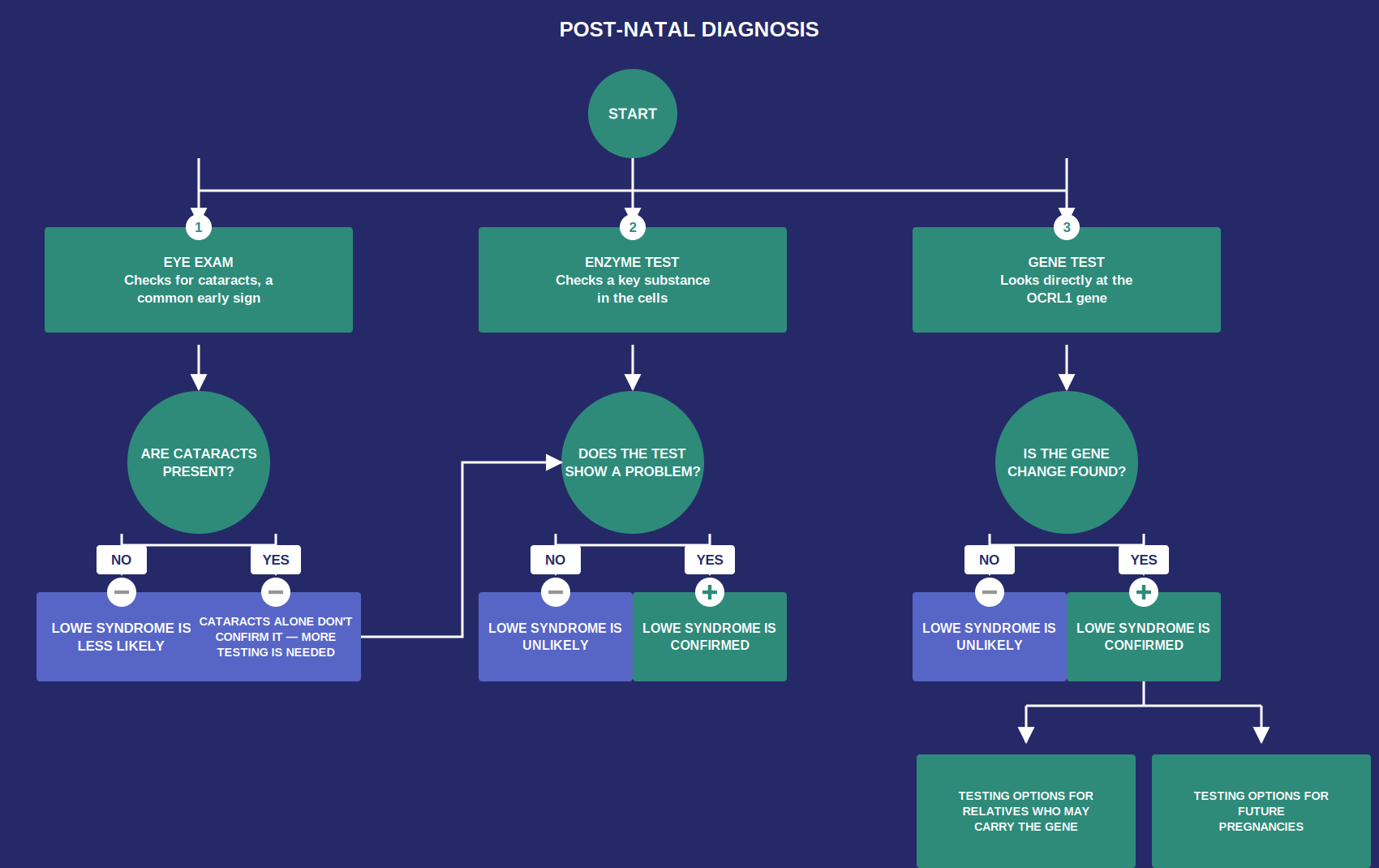
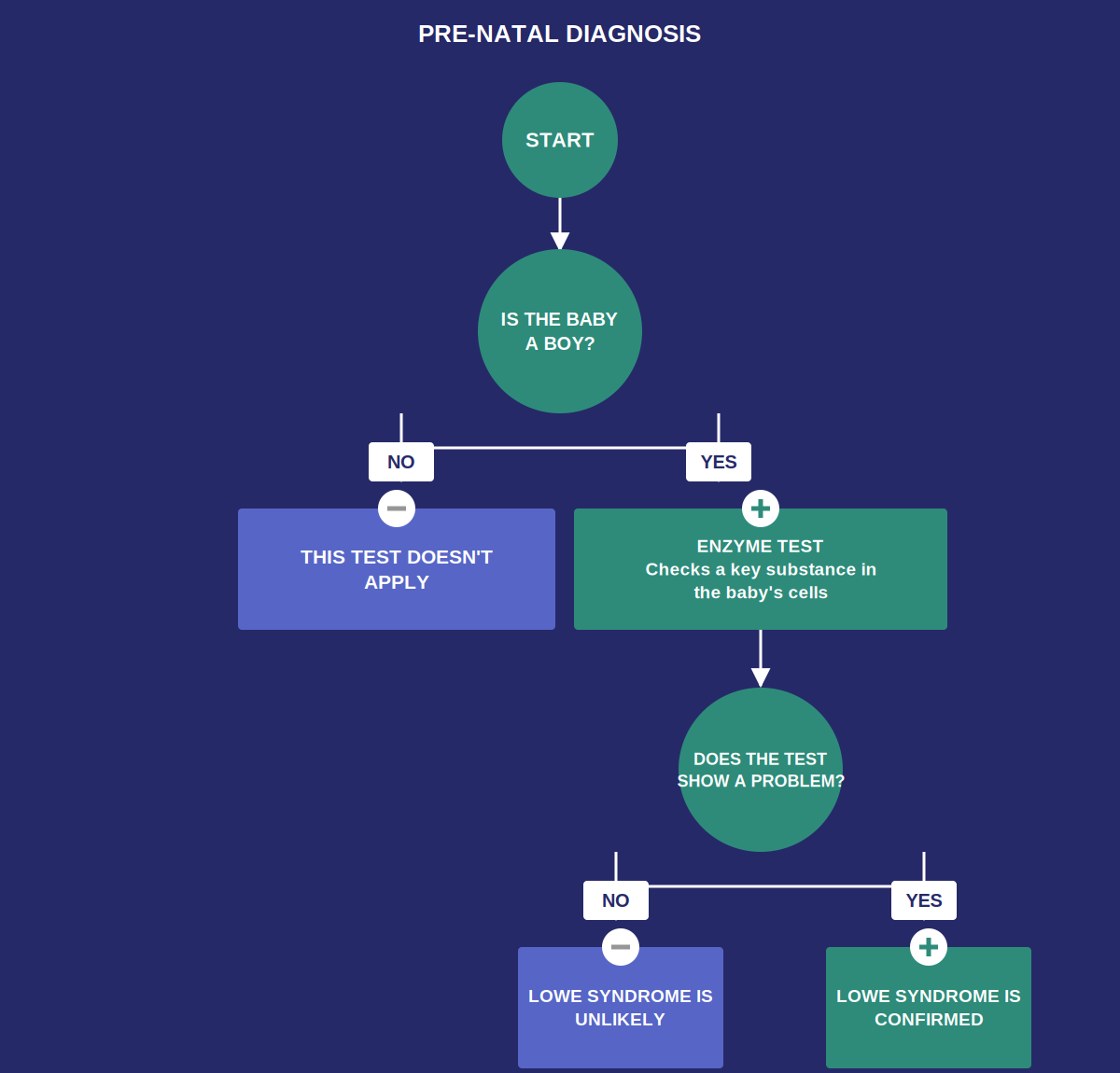
Flowcharts
These flowcharts illustrate the general steps taken to confirm a diagnosis of Lowe syndrome.